Investing in Industrial Land: 5 Success Factors
As global supply chains shift toward Southeast Asia, Vietnam has confirmed its position as the world’s “new factory.” In 2026, industrial land investment is no longer for the masses; it is the domain of strategic investors with deep knowledge of economic trends and infrastructure planning.
To optimize profits and minimize risks, here are the 5 core factors for industrial real estate investment.
1. Strategic Location and Infrastructure Connectivity
In real estate, location is the primary guide. However, for industrial land, location means multimodal transport connectivity.
- Proximity to Gateways: A prime project must be within a “golden” radius of:
- Seaports: To receive large vessels for import and export.
- International Airports: For high-value goods and the travel of experts.
- International Border Gates: Vital for supply chains linked to China or ASEAN countries.
- Highways and Main Roads: By 2026, the North-South highway and ring roads in Hanoi and Ho Chi Minh City are largely complete. Areas near highway interchanges are high-value locations for warehouses and factories. Investors should prioritize projects with wide internal roads (minimum 25-40m) to ensure 24/7 container movement.
2. Legal Transparency and Synchronized Planning
This is the most important protection for industrial land investment. Industrial land is governed by the 2024 Land Law and specific decrees on industrial and economic zones.
- Ownership Forms: Investors must distinguish between:
- Annual rental land: Lower initial cost but risks of market price fluctuations.
- One-time payment land: Higher liquidity, easier to mortgage for capital, but requires high initial capital.
- 1/500 Planning and Environmental Permits: A successful project needs clear 1/500 planning with logical zones for production, storage, and logistics. In the green economy era, projects with standardized wastewater treatment and strict Environmental Impact Assessments (EIA) have a competitive advantage in attracting multinational corporations (MNCs).
3. Infrastructure Standards and Green Industrial Trends (ESG)
In 2026, FDI enterprises do not just rent empty land; they rent a production ecosystem.
- Technical Infrastructure: To attract quality capital, an industrial park needs:
- Power: Stable grid with priority for rooftop solar infrastructure.
- Telecommunications: 5G ready for Smart Factory applications.
- Fire Prevention and Fighting (FPF): Must meet the latest standards for operational licensing.
- Net Zero and ESG: Ecological Industrial Parks (Eco-IPs) with high greenery, water recycling, and circular economy practices can command rental prices 15-20% higher than traditional parks.
4. Developer Capacity
Choosing an industrial park means choosing the infrastructure developer. A reputable developer determines 50% of the investment’s success.
- One-stop Service: Large developers support businesses with Investment Registration Certificates (IRC), Enterprise Registration Certificates (ERC), and labor recruitment. This shortens the time to bring a factory into operation.
- Financial Strength: Investors should choose developers with a strong history of project occupancy and the financial power to maintain and upgrade infrastructure regularly.
5. Human Resources and Supporting Ecosystem
Industrial land in a remote area without labor is a “dead investment.”
- Skilled Labor: Investors should survey a 20-30km radius for proximity to universities, vocational colleges, and social infrastructure like worker housing, schools, and hospitals.
- Supporting Industry Ecosystem: The presence of satellite businesses is vital. For example, investing near Samsung or LG adds value because of the hundreds of component suppliers involved.
Comparison of Industrial Land Types
| Criteria | Industrial Park (IP) | Industrial Cluster (IC) | Logistics/Warehousing |
| Scale | Large (>100ha) | Small (20-70ha) | Medium |
| Tenant Type | MNCs | SMEs | E-commerce, transport |
| Legal Status | Very strict, synchronized | More flexible, can lack unity | Prioritizes commercial/service land |
| Profit Margin | Stable (8-12%/year) | High but riskier | Fast growth due to e-commerce |
Risks to Avoid
- Suspended Planning: Projects licensed to developers who lack the capacity to implement, leading to abandonment.
- Environmental Policy Risks: Heavily polluting industries may face licensing restrictions in developed provinces.
- Compensation Cost Fluctuations: Rising costs for land clearance can make a project uncompetitive.
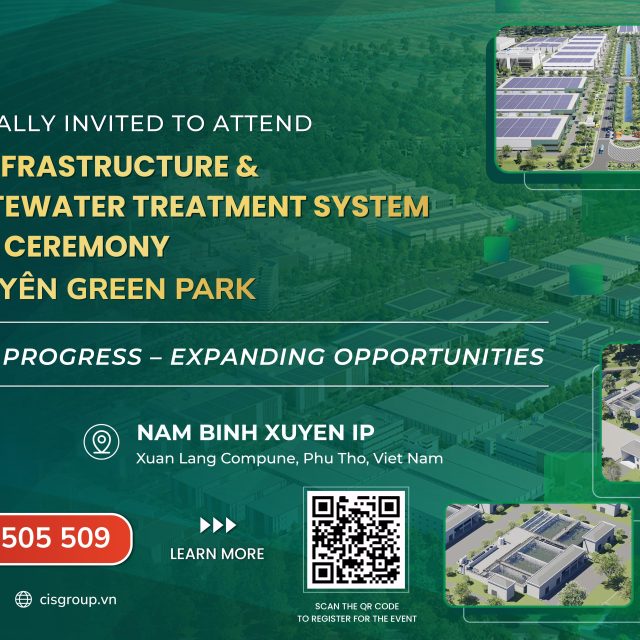
- Nam Binh Xuyen Green Park: A Next-Generation Industrial Icon
In 2026, Nam Binh Xuyen Green Park is a benchmark for infrastructure standards in Northern Vietnam.
1. “Center of the Center” Position Located in Binh Xuyen – the industrial hub of Vinh Phuc province, adjacent to Hanoi.
Aviation: 15 – 20 minutes to Noi Bai International Airport. Essential for electronics and semiconductor sectors.
- Economic Corridor: Situated on the Hanoi – Lao Cai highway, connecting to Northern border gates and seaports via Ring Roads 4 and 5.
2. Smart Infrastructure
- Intelligent Operation Center (IOC): 24/7 monitoring with AI cameras and automated traffic management.
- Smart Grid: Ensures stable power with multi-layer backup and rooftop solar integration.
- Automated Fire Safety: Meets international standards to reduce insurance premiums and meet MNC requirements.
3. Absolute ESG Advantage
- Green Density: Greenery and water surface area are 1.5 – 2 times higher than traditional IPs.
- Circular Economy: Modern wastewater treatment allows water reuse for factory cooling, reducing costs.
- Green Logistics: Parking lots equipped with charging stations for electric containers and trucks.
4. Professional Support Ecosystem The developer provides a “business solution,” not just land.
- One-Stop Service: Full support for investment permits, construction, and recruitment, shortening project deployment from 12 months to just a few months.
- High-end Amenities: Expert housing, commercial zones, banks, and medical centers are located within the IP.
Conclusion
If Phu Tho is where you expand production scale at optimal costs, Nam Binh Xuyen Green Park is where you establish a smart manufacturing headquarters. The combination of high-potential land (Phu Tho) and modern industrial standards (Nam Binh Xuyen) is the perfect formula for a sustainable industrial real estate portfolio in 2026.
🏢 CNCTech Industrial – Trusted Industrial Real Estate Partner
Hotline: (+84) 866 505 509
Email: hello@cisgroup.vn