Vietnam Industrial Real Estate Breakthrough Due to ESG Investment Wave
The ESG investment wave is driving strong growth in Vietnam’s industrial real estate. Trends in green industrial parks, green warehouses, LEED certification, and the Net Zero 2050 goal are opening major opportunities to attract FDI.
1. The ESG Investment Wave – A Global Trend Shaping Industrial Real Estate
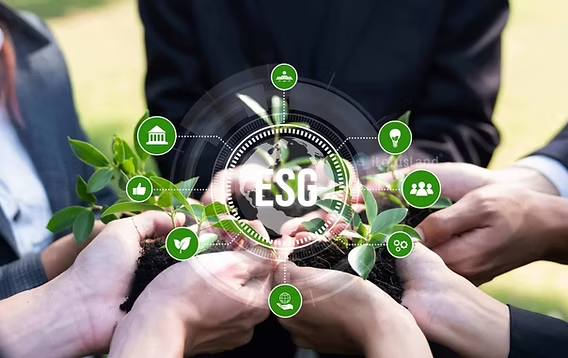
In the context of climate change and global supply chain restructuring, ESG (Environmental, Social, and Governance) standards have become the guideline for international investment capital.
According to the Emerging Real Estate Trends in Vietnam 2025 report by Indochine Strategic, sustainability is now among the top 10 trends shaping the Vietnamese real estate market.
Businesses, corporations, and investors are prioritizing green industrial park projects and energy-efficient, eco-friendly factories. ESG is becoming an essential condition for companies to join global supply chains, especially in electronics, automotive, garments, and logistics.
2. “Greening” Industrial Real Estate as a New Competitive Advantage</h
A survey by Cushman & Wakefield indicates that:
Over 70% of businesses are willing to pay 7-10% higher rent to use green warehouses.
“Visibility/Sustainability” is among the top 3 most important criteria when selecting industrial real estate.
In Vietnam, average rental costs of $4-7/m²/month are still much lower than other countries in the region. This is a competitive advantage that helps Vietnam retain investors while promoting the greening of industrial real estate.
3. Net Zero 2050 Commitment and Government Policy Support
At COP26, Vietnam declared its goal to reach net-zero emissions by 2050, showing a strong commitment to sustainable development. Several policies have been implemented to achieve this:
- Decree 80/2024/ND-CP: Direct Power Purchase Agreement (DPPA) mechanism, helping businesses access renewable energy.
- Decree 06/2022/ND-CP and Decision 280/QD-TTg: Regulations on economical and efficient energy use.
- Green Building Progress: The roadmap aimed for at least 150 green buildings by 2030, but by 2025, the number exceeded 250. This puts Vietnam in 28th place globally according to the U.S.
Green Building Council (USGBC).
These policies reduce long-term operating costs and attract ESG capital from international investors.
4. Vietnam Industrial Real Estate Growth Driven by Green FDI
In the past 5 years, Vietnam has attracted $164.15 billion in FDI across more than 12,200 new projects. In the first half of 2025 alone, FDI capital reached $21.51 billion, the highest in 15 years.
Multinational corporations such as Samsung, Intel, LG, Foxconn, Amkor, Toyota, Unilever, P&G, Nike, Adidas, and Puma are all expanding their investments. They require green certifications (LEED, EDGE, ISO 14001) for both factories and suppliers.
This creates a ripple effect, pushing supporting industries—from component manufacturing and packaging to logistics—to invest in green industrial real estate to remain in the global supply chain.
5. Booming Demand for Green Factories and Industrial Parks
The occupancy rate of industrial parks in Vietnam has reached 85-90%, with demand for ready-built green factories accelerating. Notably, 75% of LEED-certified projects in Vietnam are in the industrial warehouse and office segment, accounting for 80% of the total floor area.
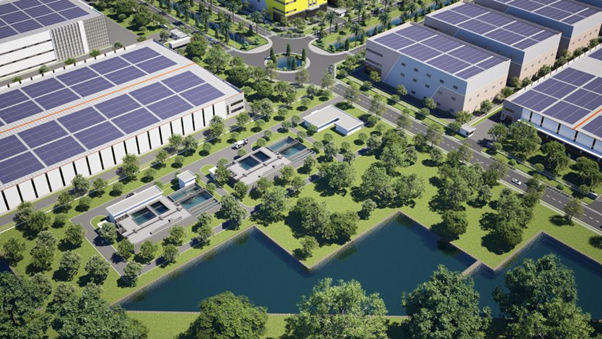
- New projects are not just using green materials but are also:
- Integrating smart designs.
- Applying energy-saving technologies.
Creating a healthy working environment for laborers. This trend encourages the rise of green industrial parks that combine sustainable infrastructure with modern logistics services.
6. Vietnam’s Advantages in the Global Supply Chain
Despite global shocks from financial crises to trade wars, Vietnam remains attractive due to:
- Competitive labor costs, among the lowest in Asia.
- Competitive industrial electricity prices, ranking 3rd lowest globally.
- Abundant industrial land, with over 11 million m² of factory floor space by 2025.
- Strategic location, near international maritime routes and Asian manufacturing hubs.
7. Prospects for Vietnam to Become Asia’s Green Industrial Hub
In the next decade, Vietnam’s industrial real estate will be defined by:
- High-quality FDI prioritizing high technology and clean production.
- Expansion of ready-built factories to meet early ESG demands.
- Development of ecological industrial parks in emerging hubs like Quang Ninh, Nghe An, and Thai Binh.
- Increased M&A activity linked to long-term sustainability strategies.
With the Net Zero 2050 commitment, government support, and international ESG capital, Vietnam has the potential to become Asia’s green industrial hub. “Greening” has become a core competitive advantage.
Contact for details:
🌐 Website: https://cisgroup.vn/
📞 Hotline: (+84) 866 505 509
📧 Email: hello@cisgroup.vn