Vietnam Industrial Real Estate Market Forecast Q4/2025: A “Stepping Stone” for Year-End Breakthrough
Despite global economic volatility, Vietnam’s industrial real estate in 2025 remains an attractive destination for investors. In Q4/2025, the market is forecasted to continue growing strongly due to stable FDI, high demand for ready-built factories, and government incentive policies. Analyzing trends, opportunities, and risks provides a clear overall picture.
1. Strong Growth Drivers
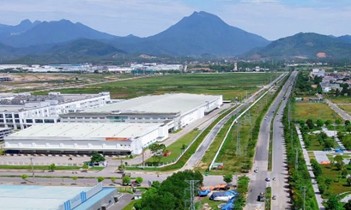
FDI continues to lead: By the end of Q3, newly registered FDI in Vietnam reached nearly $23 billion, with over 55% flowing into manufacturing and processing. This directly drives the industrial real estate market in Q4/2025, especially in provinces with integrated infrastructure like Bac Ninh, Phu Tho, Hai Phong, Bình Dương, and Đồng Nai.
Ready-built factory (RBF) demand is booming: The “rent first, produce immediately” trend keeps occupancy rates for ready-built facilities in both the North and South above 85%. High-tech, electronics, logistics, and supporting industry groups are seeking flexible solutions.
Regional transport infrastructure: Key projects such as the North-South highway, Long Thanh airport, and the Hai Phong – Cái Mép – Thị Vải seaport system create a major push for industrial real estate. Many new industrial parks benefit directly from this network in Q4/2025.
2. Notable Market Trends

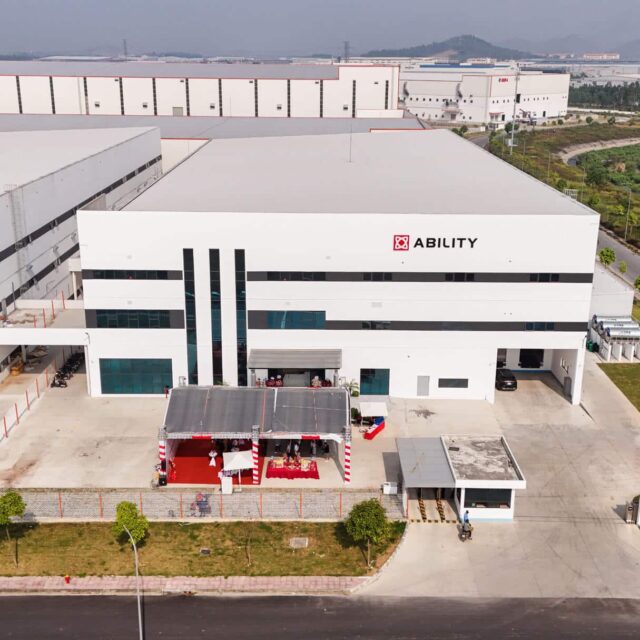
Multi-story factories as an optimal solution: As industrial land in major cities becomes scarce, multi-story ready-built factories (multi-story RBF) are becoming a trend. This solution optimizes land use while meeting modern production needs.
Integrating ESG and renewable energy: International investors set high environmental standards. Consequently, new industrial parks are implementing rooftop solar, standardized wastewater treatment, and circular waste management to move toward carbon neutrality. This is a competitive criterion for green industrial parks.
Tech-driven management and operation: Applying IoT, AI, and ERP in industrial park operations helps save costs, increase efficiency, and ensure transparency. This is an advantage that large developers like CNCTech Industrial have implemented to attract tenants.
3. Challenges in Q4/2025
Limited land: Locations near major industrial centers are nearly full, and rental prices increase 2-5% per quarter.
Pressure on power and water infrastructure: As FDI flows strongly into manufacturing, ensuring a stable power supply is a problem to solve.
Legal procedures: Many projects still take a long time to complete environmental approvals, fire safety (FPF), and construction permits.
Regional competition: Provinces in the Northern Delta and the Southeast are all offering strong incentives to attract investment, requiring investors to compare options carefully.
4. Opportunities for Investors in Q4/2025
Benefit from incentive policies: The Vietnamese Government maintains many tax incentive policies for industrial parks, including:
Corporate Income Tax (CIT) exemption for the first 2 years.
50% CIT reduction for the next 4 years.
Certain high-tech sectors can enjoy a 10% tax rate for 15 years.
Advantages from export markets: Vietnam participates in 15 free trade agreements (FTAs), creating a major advantage for manufacturing enterprises located in Vietnamese industrial parks.
In Q4/2025, as year-end orders increase strongly, the demand for renting factories and warehouses also rises.
Capturing logistics and e-commerce demand: The boom in e-commerce and cross-border delivery services is pushing up the demand for smart logistics. This is an opportunity for projects integrating green and smart logistics within industrial parks.
5. Role of Reputable Developers
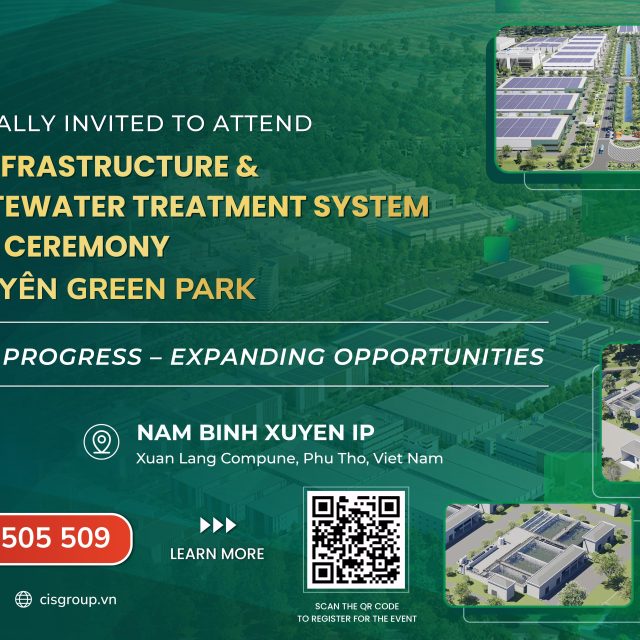
The market is seeing the emergence of domestic enterprises with the capacity to develop industrial parks professionally. CNCTech Industrial is a typical example with the Nam Binh Xuyen
Green Park project, aiming for a green-smart industrial park on a scale of nearly 300 hectares, applying 100% rooftop solar and managing with digital systems.
This shows that Vietnam’s industrial real estate is not only open to foreign investors but is also an opportunity for domestic enterprises to improve and become strategic partners in the global supply chain.
6. Market Outlook for Q4/2025 and 2026
Overall, Q4/2025 will be an acceleration phase, paving the way for a breakthrough in 2026. Market forecasts:
Industrial land rental prices will continue to increase by 3-5%/year.
Occupancy rates in key provinces will remain above 85-90%.
Ready-built factories and logistics warehouses will remain “hot” segments.
Green and smart industrial parks will hold a competitive advantage.
Conclusion
The Vietnam industrial real estate market in Q4/2025 is converging many favorable factors: stable FDI, increased production demand, attractive incentive policies, and green-smart trends.
However, investors also need to note challenges regarding land funds, infrastructure, and legal procedures.
With the right strategy, choosing reputable developers and modern infrastructure, this will be a golden time for domestic and foreign enterprises to expand investment and catch the new development cycle of Vietnam’s industrial real estate.
For details on logistics and factory/warehouse solutions, please contact:
🌐 Website: https://cisgroup.vn/
📞 Hotline: (+84) 866 505 509
📧 Email: hello@cisgroup.vn